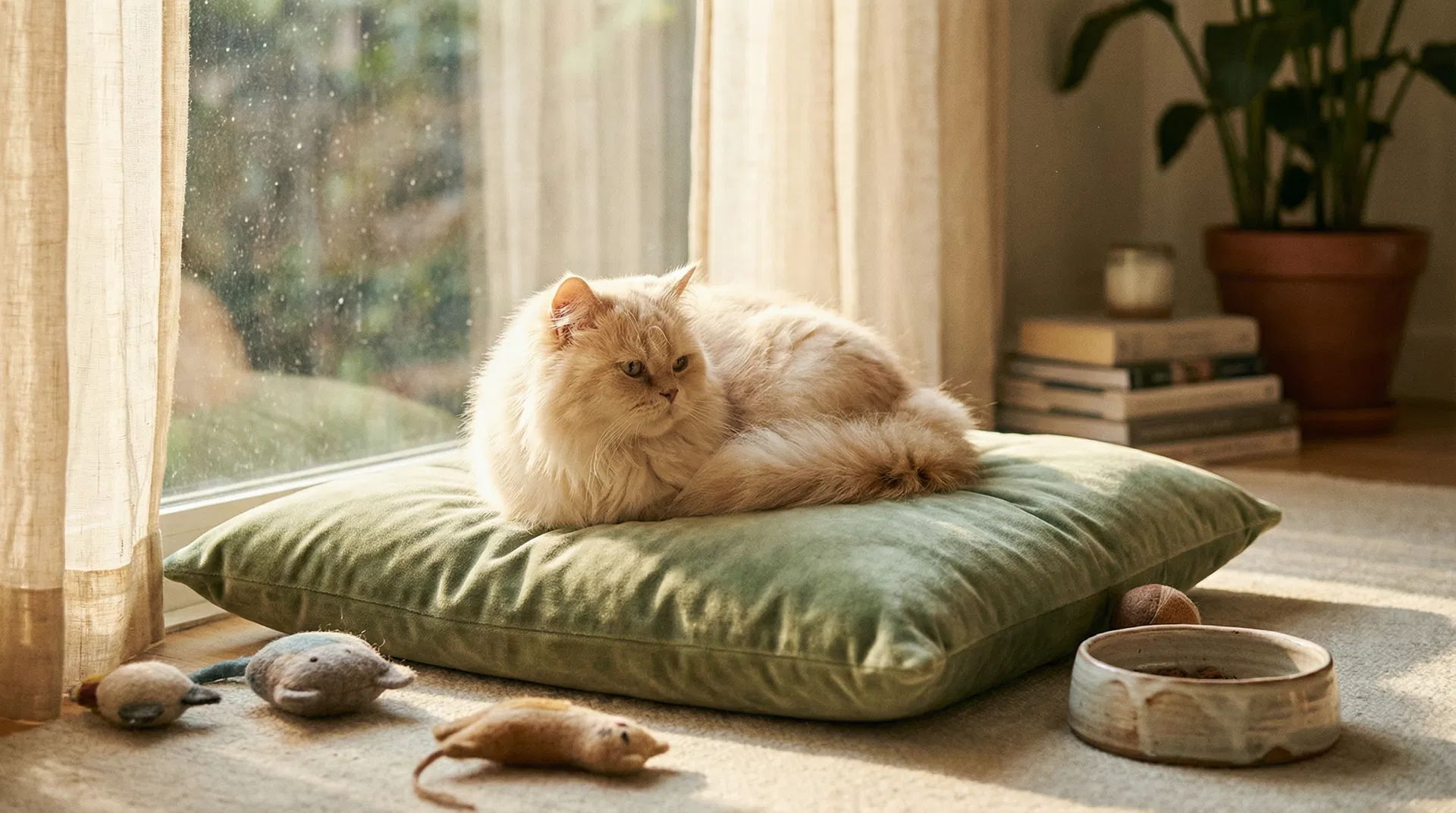
Indoor cats have unique nutritional needs that differ from their outdoor counterparts. They're less active, more prone to obesity, and often need higher moisture content in their diet. Here's what veterinarians recommend for 2025.
Why Indoor Cats Need Special Nutrition
Indoor cats burn fewer calories than outdoor cats and are at higher risk for obesity, urinary tract issues, and hairball problems. The ideal indoor cat food is calorie-controlled, high in moisture (wet food), and contains ingredients that support urinary health and reduce hairballs.
#1 Best Overall: Royal Canin Indoor Adult
Royal Canin's Indoor Adult formula is specifically designed for cats that live exclusively indoors. It contains a precise calorie content to prevent weight gain, enhanced fiber to reduce hairballs, and a blend of nutrients to support urinary health. Available on Chewy with auto-ship discounts.
#2 Best Wet Food: Wellness CORE Grain-Free
Wellness CORE's grain-free wet food formulas provide the high moisture content that cats need — especially important since cats have a naturally low thirst drive. The high protein content supports lean muscle mass, and the grain-free formula is gentle on sensitive stomachs.
The Wet vs. Dry Food Debate
Veterinary nutritionists generally recommend feeding cats a combination of wet and dry food. Wet food provides essential moisture and is closer to a cat's natural prey diet. Dry food supports dental health and is more convenient. A 50/50 split is a good starting point for most indoor cats.
Shop Cat Food on Chewy
Thousands of cat food brands with auto-ship discounts up to 35%. Free shipping on orders over $49.
Shop Top Cat Foods on Amazon